
If you spend hours staring at screens or soaking up the sun, there is one nutrient your body is likely craving: lutein. Often dubbed the “eye vitamin,” lutein is a powerful antioxidant belonging to the carotenoid family—the organic pigments that give fruits and vegetables their vibrant yellow, orange, and red hues.
While it is most famous for guarding your vision, lutein’s protective reach extends further across your body than you might think.
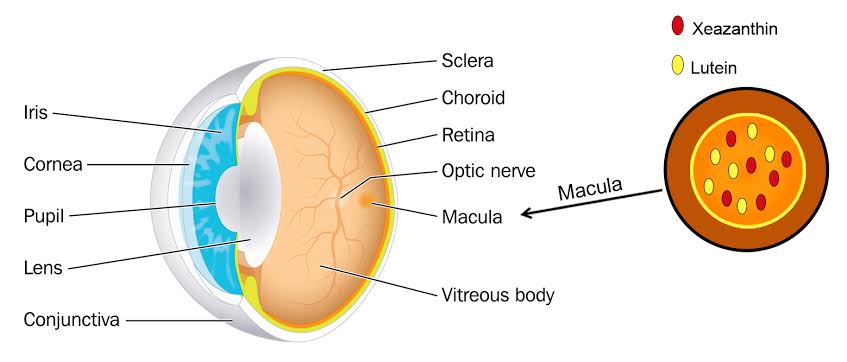
Lutein concentrates in the eye’s macula. Source: Discovery Eye Foundation
1. Natural “Internal Sunglasses” for Your Eyes
Lutein—alongside its close partner zeaxanthin—is one of only two dietary carotenoids deposited directly into your retina, specifically accumulating in the macula (the central region responsible for sharp, detailed vision).
- Blue Light Filter: Lutein absorbs high-energy blue light emitted by sunlight and digital devices before it can damage delicate eye tissue.
- Fights Age-Related Vision Loss: Major clinical trials, including the Age-Related Eye Disease Study 2 (AREDS2), show that daily lutein intake helps reduce the progression of Age-Related Macular Degeneration (AMD), the leading cause of permanent vision loss in older adults.
- Eases Eye Strain: It improves visual sharpness, contrast sensitivity, and glare recovery while soothing symptoms of dry eye syndrome.
2. Brain, Heart & Skin Protection
While eye care is its primary claim to fame, clinical research reveals that lutein works wonders throughout the rest of your body:
- Sharper Cognitive Function: Lutein is the predominant carotenoid found in brain tissue. Studies suggest that maintaining healthy lutein levels supports memory, processing speed, and learning.
- Cardiovascular Health: Lutein helps manage LDL (“bad”) cholesterol oxidation and supports healthy HDL (“good”) cholesterol, promoting clear arterial walls.
- Skin Resilience: Just as it shields the retina from light damage, lutein helps absorb UV/blue light rays in the skin, improving hydration and elasticity while slowing visible signs of aging.
How to Get More Lutein in Your Daily Diet
Your body cannot synthesize lutein on its own, so you must get it through your food or high-quality supplements.
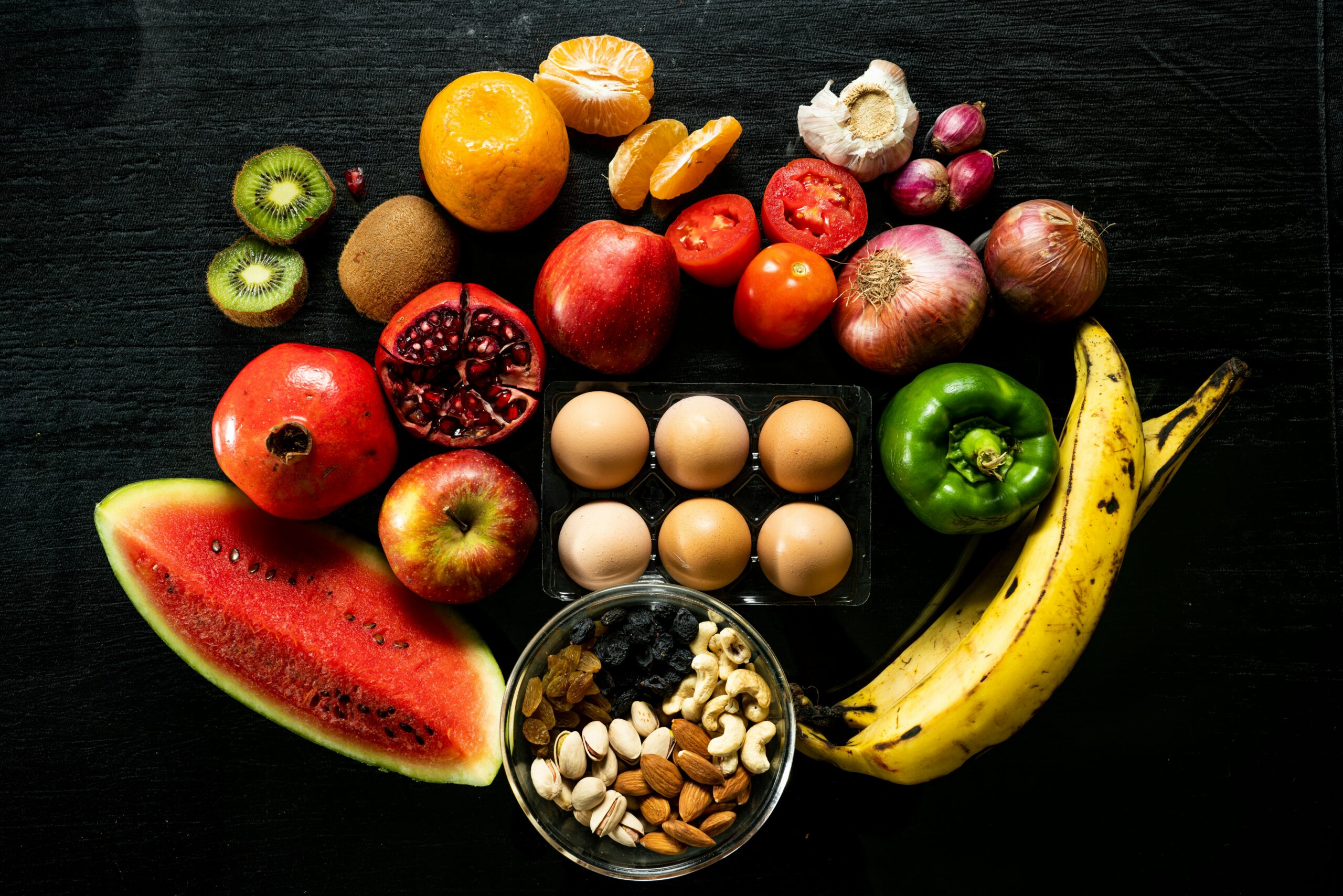
Top Food Sources:
- Dark Leafy Greens: Spinach, kale, Swiss chard, broccoli, and green peas.
- Colorful Produce: Yellow corn, summer squash, red peppers, pistachios, and avocados.
- Egg Yolks: While eggs contain lower total amounts than kale, the natural healthy fats in egg yolks make the lutein significantly easier for your body to absorb.
Pro-Tip for Maximum Absorption: Lutein is fat-soluble. To unlock its full benefits, always pair lutein-rich veggies with a healthy fat—such as olive oil, nuts, avocado, or cheese!