
If you’ve spent any time exploring energy boosters or heart-health supplements, you’ve likely come across CoQ10. Short for Coenzyme Q10, this nutrient is often hailed as a cell energizer and antioxidant powerhouse.
What exactly is CoQ10, how does it function inside your body, and could you benefit from taking it? Let’s dive in.
1. What Is CoQ10?
Coenzyme Q10 is a fat-soluble, vitamin-like compound naturally produced by your body and stored in almost every single cell. Because it plays a crucial role in energy production, its highest concentrations are found in your hardest-working organs: your heart, liver, kidneys, and pancreas.
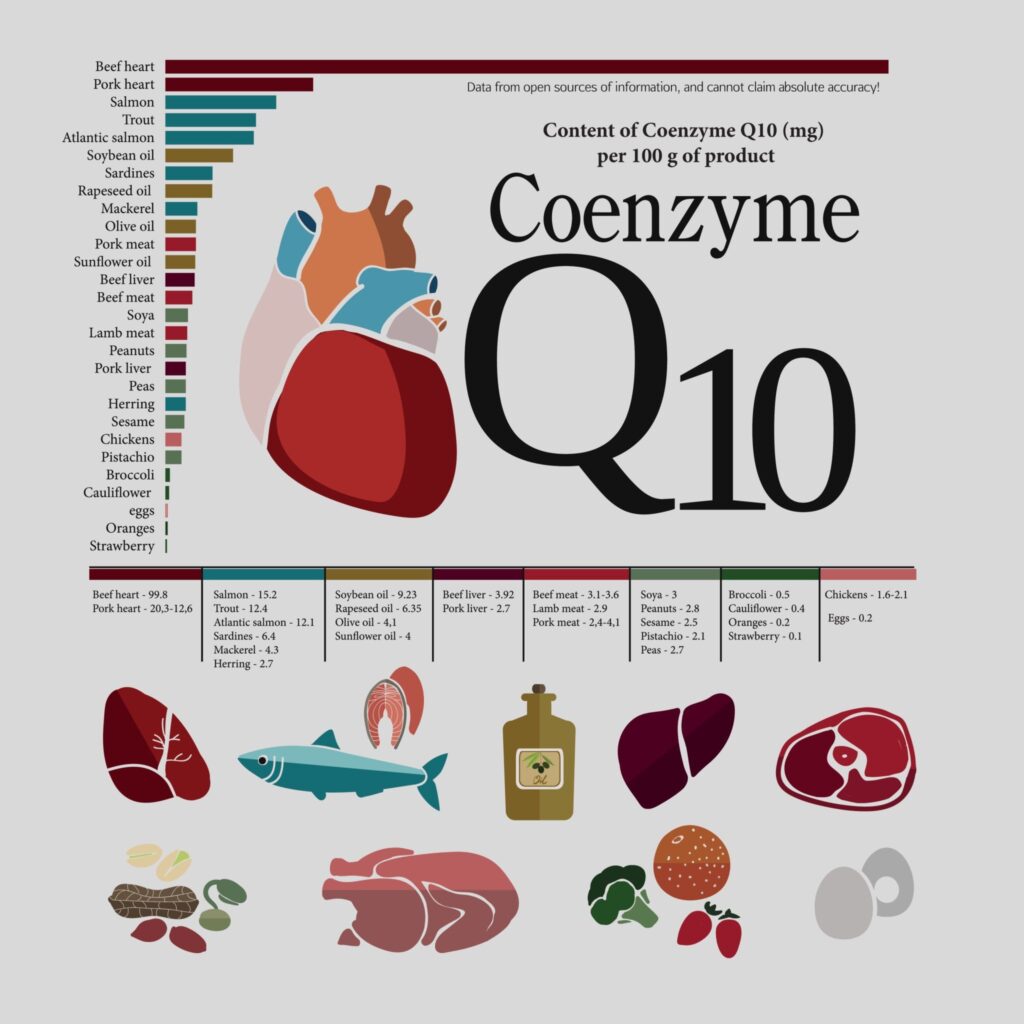
Foods with the highest content of Coenzyme Q10: fish, beef and pork meat, nuts, oils.
While your body makes CoQ10 on its own, natural production peaks in early adulthood and steadily declines as you age. Levels can also drop due to:
- Statin medications (cholesterol-lowering drugs that inadvertently block CoQ10 synthesis)
- Mitochondrial disorders or genetic defects
- Increased tissue demands caused by chronic diseases
- Oxidative stress from aging and environmental factors
2. How Does It Work inside Your Body?
To understand CoQ10, imagine your cells as tiny factories. Inside each cell are mitochondria — the biological engines that convert the food you eat into usable cellular fuel called ATP (adenosine triphosphate).
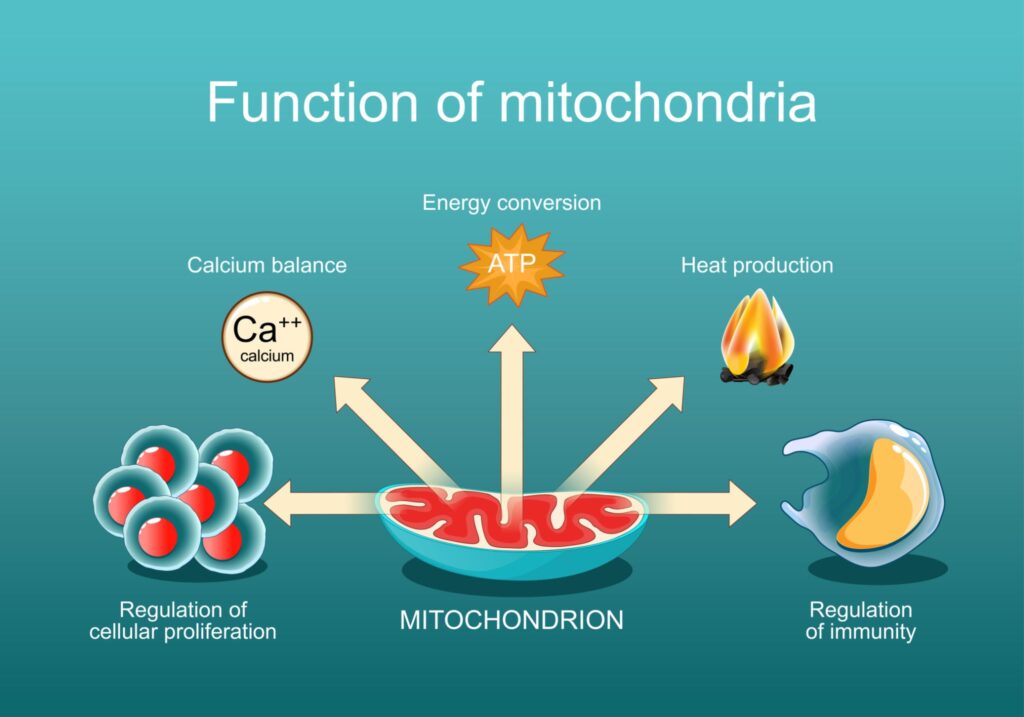
Function of mitochondria. Regulation of immunity and cellular proliferation, Calcium balance, Heat production, Energy conversion. Mitochondrial medicine. Vector poster. Isometric Flat illustration.
CoQ10 works in two primary ways:
- Power Generation (ATP Synthesis): CoQ10 acts as a key spark plug in the mitochondrial assembly line. Without sufficient CoQ10, your cells struggle to produce ATP, leading to cellular fatigue.
- Antioxidant Protection: Energy production creates harmful byproducts called free radicals. CoQ10 acts as a shield, neutralizing free radicals before they can damage cell membranes, proteins, and DNA.
Ubiquinol vs. Ubiquinone: In supplement form, you’ll see CoQ10 in two forms: ubiquinone (the oxidized form) and ubiquinol (the active, reduced form). Your body continuously converts between the two, but ubiquinol supplements are often absorbed more easily by the body, especially in older adults.
3. The Top Health Advantages & Benefits
Research highlights several key areas where CoQ10 shines:
- Supports Heart Health & Heart Failure: Because the heart requires vast amounts of energy, low CoQ10 levels are common in heart disease. Studies show supplementation can improve heart function (left ventricular ejection fraction), ease congestive heart failure symptoms, and reduce hospitalizations.
- Soothes Statin-Induced Muscle Pain: Statins lower cholesterol by blocking an enzyme in the liver — the same pathway used to produce CoQ10. Restoring CoQ10 levels may help reduce statin-related muscle aches and weakness (myopathy).
- Reduces Migraine Frequency: Low mitochondrial energy in brain cells is linked to migraines. Clinical trials show that taking CoQ10 consistently for 3 months can significantly lower the frequency, duration, and intensity of migraine headaches.
- Enhances Fertility: Both eggs and sperm are highly vulnerable to oxidative damage. CoQ10 helps protect egg quality in women as they age and improves sperm motility and concentration in men.
- Aids Blood Sugar & Metabolic Health: By reducing oxidative stress and improving mitochondrial function, CoQ10 helps improve insulin sensitivity and support healthier blood sugar regulation.
4. How to Use CoQ10 & Dosage Guidelines
Because CoQ10 is fat-soluble, absorption in the gut is slow. To get the most out of it:
- Take It with Food: Always take CoQ10 alongside a meal or snack containing healthy fats (like avocado, eggs, nuts, or olive oil) to dramatically boost absorption. Softgel capsules suspended in oil are generally more bioavailable than dry powder capsules.
- Standard Daily Dosage:
- General maintenance: 60 mg to 200 mg daily.
- Therapeutic doses (Heart failure, statin pain, migraines): 100 mg to 400 mg daily (often split into two doses, e.g., 100 mg twice a day).
- High clinical doses up to 1,200–3,000 mg have been evaluated in research for severe neurodegenerative conditions under strict medical supervision.
- Dietary Sources: You can also boost intake naturally through food: organ meats (heart, liver), fatty fish (trout, mackerel, sardines), beef, soybeans, sesame seeds, and pistachios.
5. Safety, Side Effects, and Drug Interactions
CoQ10 is remarkably safe and well-tolerated by most people, even at higher doses. However, potential mild side effects and interactions are worth noting:
Potential Side Effects
- Mild digestive issues (nausea, upper stomach discomfort, diarrhea, or loss of appetite)
- Mild headaches, dizziness, or light sensitivity
- Difficulty sleeping or mild restlessness (avoid taking it right before bed)
- Mild skin rash
Important Drug Interactions
- Warfarin (Jantoven / Coumadin): CoQ10 is structurally similar to Vitamin K and may decrease the effectiveness of blood thinners, increasing the risk of blood clots.
- Diabetes Medications: CoQ10 may lower blood sugar, which could require adjustments if combined with insulin or oral diabetes drugs.
- Chemotherapy: Because it is a potent antioxidant, consult an oncologist before taking CoQ10 during cancer therapy.
- Pregnancy & Breastfeeding: Safety hasn’t been conclusively established, so avoid use without explicit approval from your doctor.
The Bottom Line
CoQ10 is a foundational nutrient that keeps your cellular engines running smoothly while defending your body against oxidative wear-and-tear. Whether you’re looking to support your heart, manage statin side effects, or stave off migraines, it remains one of the most thoroughly researched supplements available.
Always consult your healthcare provider before starting any new supplement regimen to ensure it aligns with your personal health profile.